The Night the Vienna Philharmonic Was Born, the Day Three Mile Island Shook America — March 28 in World History
🌍 This Day in World History — TOP 5
In 1842, the most celebrated orchestra in history played its very first note in Vienna. In 1979, a small island in Pennsylvania became synonymous with nuclear terror. Between them lie stories of war's end, humanity's conquest of sea and sky, and the fragile line between progress and catastrophe. March 28 has never been a quiet day.
1. The Vienna Philharmonic Orchestra Performs for the First Time (1842)
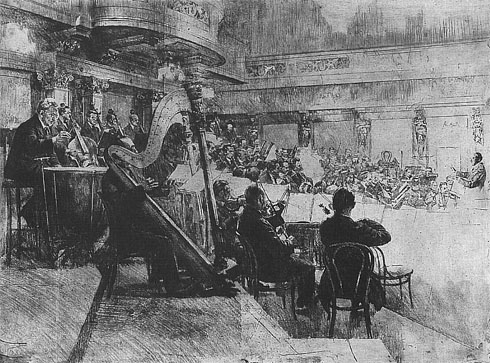
Background: By the mid-19th century, Vienna had long been the beating heart of European classical music. Mozart, Beethoven, and Schubert had all called it home. Yet the city lacked a permanent, self-governing symphony orchestra. Otto Nicolai, a German-born composer and conductor serving as Kapellmeister at the Vienna Court Opera, championed the idea of an independent concert orchestra free from the constraints of opera accompaniment.
What Happened: On March 28, 1842, Otto Nicolai raised his baton for the first concert of the Vienna Philharmonic in the Redoutensaal (a grand ballroom in the Hofburg Palace). The program featured works by Beethoven and Mozart. The audience erupted in applause. What made this orchestra revolutionary was not just its artistry but its governance — the musicians themselves would elect their conductor and choose their repertoire, a democratic model unprecedented in the orchestral world.
Significance: Over 184 years later, the Vienna Philharmonic remains one of the world's preeminent orchestras. Its annual New Year's Concert, broadcast to over 90 countries and watched by an estimated 50 million viewers, has become one of the most beloved traditions in classical music. Legends like Herbert von Karajan, Leonard Bernstein, and Wilhelm Furtwängler have all stood on its podium.
2. The Crimean War Begins: Britain and France Declare War on Russia (1854)
Background: In the early 1850s, Russia's aggressive southward expansion alarmed the major European powers. A dispute over the guardianship of Christian holy sites in the Ottoman Empire — pitting Russia against France — combined with Britain's strategic anxiety over Russian control of the Black Sea straits. When Russia declared war on the Ottoman Empire in October 1853, the stage was set for a broader European conflict.
What Happened: On March 28, 1854, Britain and France formally declared war on Russia, siding with the Ottoman Empire to check Russian expansion. A massive allied force of approximately 620,000 troops was eventually deployed to the Crimean Peninsula. The centerpiece of the war was the grueling 349-day Siege of Sevastopol. By the war's end, roughly 500,000 soldiers had perished — more than half from disease rather than combat.
Significance: The Crimean War ushered in the modern era of warfare. It was the first conflict to make extensive use of railways and the telegraph for military operations. War correspondents and photographers appeared on the battlefield for the first time, bringing the horrors of combat to the public. Florence Nightingale revolutionized battlefield medicine during this war. Russia's defeat triggered sweeping internal reforms, including the emancipation of the serfs in 1861.
3. Henri Fabre Flies the World's First Seaplane (1910)

Background: Seven years after the Wright Brothers' historic flight at Kitty Hawk, aviation technology was advancing rapidly. Yet one frontier remained unconquered: taking off from water. Henri Fabre (1882–1984), a self-taught French engineer from Marseille, had been obsessively studying aerodynamics and hydrodynamics, determined to build an aircraft that could launch from a body of water.
What Happened: On March 28, 1910, Henri Fabre climbed aboard his creation — the "Hydravion" — at the Étang de Berre lagoon near Marseille and successfully took off from the water's surface. He flew approximately 800 meters in what is officially recognized as the world's first seaplane flight. The craft was a canard-configuration monoplane mounted on three floats, powered by a 50-horsepower Gnome rotary engine.
Significance: Fabre's achievement opened an entirely new chapter in aviation history. Seaplanes went on to play critical roles in both World Wars, serving in maritime reconnaissance and anti-submarine operations. In civilian aviation, flying boats pioneered transoceanic routes before the era of long-range land-based aircraft. The word "hydravion" itself entered the French language as the standard term for seaplane — a lasting tribute to Fabre's invention.
4. The Spanish Civil War Ends: Franco Captures Madrid (1939)
Background: The Spanish Civil War, which erupted in July 1936, pitted the left-wing Republican government against Nationalist forces led by General Francisco Franco. Far from a purely domestic conflict, it became a proxy war for the great ideological struggle of the age. Nazi Germany and Fascist Italy backed Franco with troops and weapons, while the Soviet Union and the International Brigades supported the Republic. An estimated 500,000 people died in the fighting — and the war produced one of the most powerful anti-war artworks ever created: Picasso's Guernica.
What Happened: On March 28, 1939, Franco's Nationalist forces entered Madrid after a three-year siege. The fall of the capital effectively ended the war. Madrid's inhabitants had endured catastrophic hunger and relentless bombardment, but resistance had finally collapsed. The Republican leadership had already fled the country. Four days later, on April 1, Franco officially declared the war over.
Significance: The end of the Spanish Civil War cast a long shadow over Europe. Franco's dictatorship would rule Spain for the next 36 years, until his death in 1975. More immediately, the war had served as a proving ground for German and Italian military tactics — particularly the Luftwaffe's terror bombing of Guernica. Just five months later, on September 1, 1939, World War II began. The Spanish Civil War had been its prologue.
5. The Three Mile Island Nuclear Accident (1979)

Background: In the wake of the 1970s oil crises, the United States was aggressively expanding its nuclear energy program. Three Mile Island, a small island in the Susquehanna River near Harrisburg, Pennsylvania, housed a nuclear power station whose Unit 2 reactor had only begun commercial operation in December 1978 — barely three months before disaster struck.
What Happened: At 4:00 AM on March 28, 1979, a coolant leak triggered a chain of catastrophic events at Three Mile Island's Unit 2. A malfunction in the secondary cooling system was compounded by operator error and a fatally misleading instrument panel design. Approximately 45% of the reactor core melted down. The governor ordered the evacuation of pregnant women and young children within an 8-kilometer radius, and about 140,000 residents fled voluntarily.
Significance: Three Mile Island was the most serious accident in the history of U.S. commercial nuclear power. While a massive release of radiation was narrowly averted, public trust in nuclear energy was shattered. The United States did not approve the construction of a new nuclear power plant for roughly 30 years after the incident. The disaster at Chernobyl seven years later (1986) and Fukushima 32 years later (2011) kept the nuclear safety debate alive — a debate that continues to this day.
📌 History is a mirror reflecting today. Learning from past mistakes and drawing inspiration from great achievements — that's why we study history. What historical events await you tomorrow?
Comments
Post a Comment