In 1789, the United States Constitution came to life for the very first time. In 1918, a single soldier's cough at a Kansas military base would spiral into humanity's deadliest plague. March 4 is a date etched with events that reshaped civilizations — from the birth of constitutional democracy to the creation of Wall Street's most-watched index. Here are five moments that defined this day.
🌍 This Day in History — TOP 5
1. The U.S. Constitution Comes Alive — First Congress Convenes (1789)
Background: After declaring independence in 1776, the fledgling United States operated under the Articles of Confederation — a framework so weak that the central government couldn't levy taxes, regulate commerce, or maintain a standing army. By 1787, the nation was on the brink of collapse. That summer, delegates gathered in Philadelphia and hammered out a revolutionary new Constitution. After a fierce ratification battle across 13 states, the document met the threshold for adoption on June 21, 1788. The new government's launch date was set: March 4, 1789.
What Happened: On March 4, 1789, in New York City — then the nation's capital — the First United States Congress officially convened, bringing the Constitution into effect. Twenty-two senators and fifty-nine representatives took their seats, forming the legislative branch of a government unlike any the world had seen. On April 30, George Washington would be inaugurated as the first president, completing the architecture of a system built on separation of powers, federalism, and individual rights — a system that has endured for over 237 years without replacement.
Significance: This was the first time in history that a nation was governed by a written constitution ratified by the people's representatives. The American model would profoundly influence the French Revolution, Latin American independence movements, and democratic constitutions worldwide. March 4 served as the presidential inauguration date in the United States until the 20th Amendment moved it to January 20 in 1937.
2. Patient Zero of the Deadliest Pandemic — The Spanish Flu Begins (1918)

Background: By early 1918, World War I had been raging for nearly four years. Millions of soldiers were packed into cramped trenches and crowded barracks across Europe and North America. Sanitation was poor, nutrition was worse, and immune systems were battered by years of war. The stage was set for a catastrophe that would dwarf the war itself in its death toll — a pandemic that would become the deadliest in recorded human history.
What Happened: On March 4, 1918, a case of influenza was recorded at Camp Funston, a military base in Kansas. This is conventionally regarded as the beginning of the Spanish flu pandemic. The virus hitched a ride with troop movements, spreading across the Atlantic to the battlefields of Europe and eventually to every inhabited continent. Between 1918 and 1920, it infected roughly one-third of the world's population — about 500 million people. The death toll is estimated between 50 million and 100 million, making it three to five times deadlier than the war that raged alongside it.
Significance: The Spanish flu fundamentally reshaped public health policy worldwide. Mandatory mask-wearing, quarantines, and bans on public gatherings — measures we saw again during COVID-19 — were first implemented at scale in 1918. The pandemic also exposed deep inequalities: colonial populations in India and Africa suffered disproportionately, with an estimated 18 million deaths in India alone. A century later, the lessons of 1918 remain painfully relevant.
3. "The Only Thing We Have to Fear Is Fear Itself" — FDR Takes Office (1933)
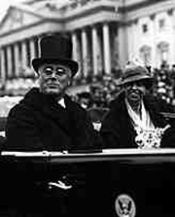
Background: The Wall Street crash of October 1929 had plunged the United States — and much of the world — into the Great Depression. By early 1933, unemployment had soared to 25%. Over 5,000 banks had failed. Factories stood idle, breadlines stretched for blocks, and farmers burned crops they couldn't sell. President Herbert Hoover's laissez-faire approach had done little to stem the tide, and Americans were desperate for change. The nation teetered on the edge of social collapse.
What Happened: On March 4, 1933, Franklin Delano Roosevelt was inaugurated as the 32nd President of the United States. In his address, he delivered one of the most iconic lines in political history: "The only thing we have to fear is fear itself — nameless, unreasoning, unjustified terror which paralyzes needed efforts to convert retreat into advance." Within days, he declared a national bank holiday to halt the banking panic. Over the next "Hundred Days," he unleashed the New Deal — an unprecedented wave of legislation creating jobs, regulating finance, and building a social safety net. On the same day, Frances Perkins was confirmed as Secretary of Labor, becoming the first woman to serve in a U.S. presidential cabinet.
Significance: Roosevelt would go on to win an unprecedented four presidential elections, leading America through the Depression and World War II. The New Deal created Social Security, the Securities and Exchange Commission, and countless public works that still serve Americans today. His inauguration on March 4, 1933, was also the last to take place on that date — the 20th Amendment subsequently moved it to January 20.
4. Wall Street's Most Important Number Is Born — The S&P 500 (1957)
Background: In the postwar economic boom of the 1950s, the American stock market was growing rapidly, but investors lacked a comprehensive benchmark to track its performance. The Dow Jones Industrial Average, consisting of just 30 companies, was widely followed but represented only a narrow slice of the economy. Standard & Poor's had been maintaining a broader index since 1923, but with the advent of computer technology capable of processing large datasets in real time, a far more ambitious index became feasible.
What Happened: On March 4, 1957, Standard & Poor's launched the S&P 500 index, replacing the older S&P 90. The new index tracked 500 large-cap companies listed on American stock exchanges, weighted by market capitalization. Its base value was set at 10, calculated from a reference period of 1941-1943. The broader coverage and transparent methodology quickly won over institutional investors, who found it far more representative of the overall market than its 30-stock competitor.
Significance: Today, the S&P 500 is the world's most important stock market benchmark. More than $50 trillion in assets are indexed or benchmarked to it globally. Pension funds, sovereign wealth funds, and individual retirement accounts around the world rise and fall with its movements. Warren Buffett famously advised that for most investors, a low-cost S&P 500 index fund is the single best investment they can make — a testament to the enduring power of an idea born on this day in 1957.
5. A Sitting President Faces Justice — ICC Issues First-Ever Head-of-State Arrest Warrant (2009)
Background: Since 2003, the Darfur region in western Sudan had been engulfed in a devastating conflict. Government forces and government-backed Janjaweed militias carried out systematic attacks on civilian populations under the pretext of crushing rebel groups. Entire villages were burned, hundreds of thousands were killed, and approximately 2.5 million people were displaced. The United Nations called it "the worst humanitarian crisis in the world," and in 2005, the UN Security Council referred the situation to the International Criminal Court (ICC).
What Happened: On March 4, 2009, the ICC issued an arrest warrant for Sudanese President Omar al-Bashir on five counts of war crimes and two counts of crimes against humanity. This was the first time in the court's history — and indeed in the history of international criminal justice — that a sitting head of state had been indicted. In 2010, genocide charges were added. Al-Bashir refused to surrender and traveled only to non-ICC member states to avoid arrest. He remained in power until a military coup in April 2019 ousted him, after which Sudan agreed to hand him over for trial.
Significance: The al-Bashir warrant established a groundbreaking principle: no leader, however powerful, is above international law. While enforcement remained a challenge for years, the precedent sent a powerful message to leaders worldwide that atrocities would not go unnoticed. The case reinvigorated debates about the ICC's effectiveness and the tension between sovereignty and accountability — questions that remain central to international relations today.
📌 History is a mirror reflecting today. Learning from past mistakes and drawing inspiration from great achievements — that's why we study history. What historical events await you tomorrow?
Comments
Post a Comment