The Night Uranus Was Discovered, the Day the First Pope from the Americas Was Elected — This Day in History, March 13
In 1781, a musician-turned-astronomer pointed his telescope at the sky and doubled the size of the known solar system. In 1930, a tiny frozen world at the edge of darkness finally got its name announced to humanity. In 1943, the streets of Kraków fell silent as an entire community was erased. In 1988, engineers conquered the ocean floor to connect two islands separated by treacherous waters. In 2013, white smoke rose over St. Peter's Square and a man from Buenos Aires stepped onto a balcony to change the Catholic Church forever. March 13 is a day of discovery and tragedy, ambition and hope.
🌍 Today in World History — TOP 5
1. 1781 — William Herschel Discovers Uranus
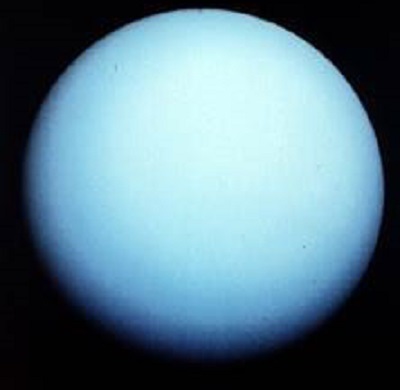
On the night of March 13, 1781, German-born British astronomer William Herschel was conducting a systematic survey of the night sky from his home in Bath, England, using a reflecting telescope he had built himself. Near the constellation Gemini, he spotted an unusual object that appeared as a disk rather than a point of light. Initially believing it to be a comet, Herschel reported his observation to the Royal Society. But as other astronomers calculated its orbit, the truth emerged: this was no comet — it was a planet.
The discovery of Uranus was nothing short of revolutionary. Since antiquity, humanity had known only five planets — Mercury, Venus, Mars, Jupiter, and Saturn — all visible to the naked eye. In a single night, the boundaries of the solar system doubled. Uranus orbits the Sun at a distance of roughly 2.9 billion kilometers, taking 84 Earth years to complete a single lap. It was the first planet discovered using a telescope, marking a turning point from ancient observation to modern scientific exploration.
Herschel was rewarded with a royal stipend from King George III, allowing him to pursue astronomy full-time. His discovery set off a chain reaction: the orbital irregularities of Uranus would later lead to the discovery of Neptune in 1846. March 13, 1781 was the night humanity realized the solar system was far bigger than anyone had imagined.
2. 1930 — The Discovery of Pluto Is Announced to the World
On March 13, 1930, the Lowell Observatory in Flagstaff, Arizona, officially announced the discovery of the solar system's ninth planet. The actual observation had been made on February 18 by 24-year-old astronomer Clyde Tombaugh, but the announcement was deliberately timed to coincide with two anniversaries: Percival Lowell's birthday (March 13, 1855) and the discovery of Uranus on this same date in 1781.
The story behind Pluto's discovery spans decades. Wealthy businessman and astronomer Percival Lowell had been convinced that gravitational perturbations in the orbits of Uranus and Neptune pointed to an undiscovered "Planet X." He launched a search in 1906 but died in 1916 without finding it. Fourteen years later, young Tombaugh — a Kansas farm boy who had impressed the observatory with his hand-drawn telescope observations — fulfilled Lowell's dream by painstakingly comparing photographic plates to spot a tiny moving dot.
The name "Pluto" was suggested by Venetia Burney, an eleven-year-old schoolgirl in Oxford, England, who thought of the Roman god of the underworld. While the International Astronomical Union reclassified Pluto as a "dwarf planet" in 2006 — sparking a debate that continues to this day — the excitement of its discovery remains a landmark moment in astronomical history. Combined with Uranus's discovery on this same date, March 13 stands as the solar system's most remarkable day.
3. 1943 — The Liquidation of the Kraków Ghetto

On March 13, 1943, Nazi German forces carried out the final liquidation of the Jewish ghetto in Kraków, Poland. Established in March 1941, the ghetto had confined approximately 15,000 Jews from Kraków and surrounding areas into a cramped district of just 600 by 400 meters. For two years, residents endured starvation, disease, and forced labor while living under the constant threat of deportation and death.
The liquidation was commanded by SS-Untersturmführer Amon Göth, who would later become the commandant of the nearby Kraków-Płaszów concentration camp. During the operation, roughly 8,000 Jews deemed "fit for labor" were transferred to Płaszów. Approximately 2,000 others — the elderly, the sick, and children — were sent to the Auschwitz-Birkenau extermination camp. Hundreds were shot on sight in the streets and in their homes. Those found hiding were executed where they were discovered.
This tragedy became known worldwide through Steven Spielberg's 1993 film Schindler's List, which tells the story of German industrialist Oskar Schindler, who saved approximately 1,200 Jews by employing them in his factories. The liquidation of the Kraków Ghetto remains one of the most visceral symbols of the Holocaust's horrors — a reminder that civilization can collapse when hatred goes unchecked, and that individual acts of courage can still shine in the darkest of times.
4. 1988 — The Seikan Tunnel Opens: The World's Longest Undersea Tunnel
On March 13, 1988, Japan opened the Seikan Tunnel, connecting the islands of Honshu and Hokkaido beneath the Tsugaru Strait. At 53.85 kilometers in total length — with 23.3 kilometers running under the seabed — it was the longest tunnel in the world at the time and remains the longest undersea tunnel segment ever built.
The impetus for the tunnel was a devastating maritime disaster. On September 26, 1954, Typhoon Marie sank the ferry Tōya Maru in the Tsugaru Strait, killing 1,430 passengers and crew in one of Japan's worst peacetime maritime accidents. The tragedy made the case for a fixed link between the islands undeniable. Construction began in 1961 and would take an extraordinary 24 years to complete. Thirty-four workers lost their lives during construction, battling groundwater intrusion at depths of 240 meters below sea level and navigating unstable geological formations.
The tunnel gained new significance in 2016 when the Hokkaido Shinkansen began service, cutting travel time from Tokyo to Shin-Hakodate-Hokuto to just four hours. The Seikan Tunnel stands as a monument to human engineering ambition — proof that with enough determination, even the ocean floor can be conquered.
5. 2013 — Pope Francis Is Elected: A Papacy of Firsts

At 7:06 PM Rome time on March 13, 2013, white smoke billowed from the chimney of the Sistine Chapel. The 266th Pope of the Catholic Church had been chosen: Cardinal Jorge Mario Bergoglio, the Archbishop of Buenos Aires, Argentina. His election was a cascade of firsts — the first pope from the Americas, the first Jesuit pope, and the first to take the name Francis, after St. Francis of Assisi, the patron saint of the poor.
The choice of name was itself a manifesto. St. Francis of Assisi had renounced wealth to serve the destitute, and the new pope signaled his intentions from the very first moments of his papacy. He chose to live in the Vatican guesthouse rather than the papal apartments. He traded the papal limousine for a modest Ford Focus. He washed the feet of juvenile detainees on Holy Thursday, including those of women and Muslims — breaking with centuries of tradition.
But it was his first words from the balcony that truly set the tone. Before offering the traditional papal blessing, Francis made an unprecedented request: he asked the crowd in St. Peter's Square to pray for him. The silence that followed — as tens of thousands bowed their heads — was one of the most powerful moments in modern papal history. Pope Francis's election signaled that the Catholic Church, with its 1.3 billion members, was ready for a leader who prioritized service over authority, humility over pomp.
📌 History is a mirror reflecting today. Learning from past mistakes and drawing inspiration from great achievements — that's why we study history. What historical events await you tomorrow?
Comments
Post a Comment