🌍 Today in World History — TOP 5
The birth of Renaissance genius Michelangelo in 1475, the devastating fall of the Alamo in 1836, America's worst Supreme Court decision in 1857, the scramble for power after Stalin's death in 1953, and Ghana blazing a trail for African independence in 1957 — March 6 is a day where humanity's greatest triumphs and darkest moments collide.
1. 1475 — Renaissance Genius Michelangelo Buonarroti Is Born

Background — In the late 15th century, Italy was experiencing the golden age of the Renaissance. Under the patronage of the Medici family in Florence, art and scholarship were flourishing as never before. Leonardo da Vinci, Sandro Botticelli, and other masters were at the height of their careers. In the small town of Caprese, a boy was born to a local magistrate — a boy destined to surpass them all.
What Happened — On March 6, 1475, Michelangelo di Lodovico Buonarroti Simoni was born in Caprese, Tuscany. Displaying extraordinary talent from childhood, he entered the workshop of Domenico Ghirlandaio at age 13, then studied at the Medici sculpture garden. His masterpieces include the David (1504), the Sistine Chapel ceiling (1508–1512), the Pietà (1499), and The Last Judgment (1536–1541). He also designed the dome of St. Peter's Basilica, leaving an indelible mark on architecture as well.
Significance — Michelangelo embodied the Renaissance ideal of the universal genius, excelling in sculpture, painting, architecture, and poetry. Living to age 89, he created art for over six decades. His works continue to draw millions of visitors annually, half a millennium later. Alongside Leonardo da Vinci, he stands as one of the two towering figures of the Renaissance — and arguably of all Western art.
2. 1836 — The Fall of the Alamo: 13 Days of Siege End in Total Annihilation
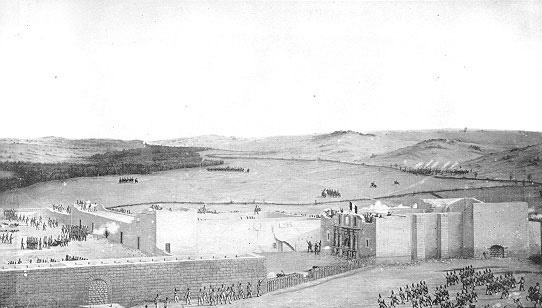
Background — In 1835, settlers in Mexican Texas revolted against President Santa Anna's centralization policies. The Texas Revolution had begun. Santa Anna marched north with approximately 2,000 troops to crush the rebellion. At the Alamo Mission in San Antonio, roughly 187 Texan volunteers — led by William Travis, James Bowie, and legendary frontiersman Davy Crockett — prepared to make their stand.
What Happened — After a 13-day siege beginning February 23, Mexican forces launched their final assault at dawn on March 6, 1836. The defenders repelled two waves of attackers before the walls were breached on the third attempt. Texan fighters retreated into interior buildings for a desperate last stand, but virtually all were killed. Travis, Bowie, and Crockett all perished. Mexico suffered significant casualties as well — officially 60 killed and 250 wounded, though Texan estimates placed the figure at 400–600. Only a handful of non-combatants — women, children, and enslaved people — survived.
Significance — "Remember the Alamo!" became the rallying cry of the Texan army. Six weeks later, on April 21, Sam Houston's forces shouted these words as they routed Santa Anna's army at the Battle of San Jacinto, securing Texas independence. The Alamo has since become one of America's most powerful symbols of sacrifice and resistance. Today, it is Texas's most visited historic site, drawing over 2.5 million visitors annually.
3. 1857 — The Dred Scott Decision: America's Worst Supreme Court Ruling
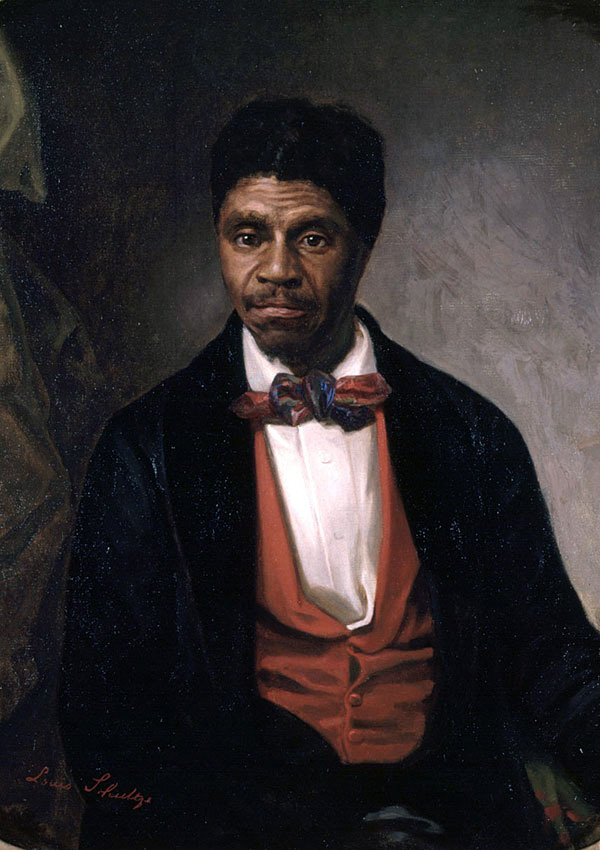
Background — Dred Scott was an enslaved man from Missouri who had lived for several years in Illinois (a free state) and Wisconsin Territory (where slavery was banned under the Missouri Compromise) while accompanying his owner. In 1846, he filed suit arguing that his residence in free territory entitled him and his family to freedom. The case wound its way through lower courts before reaching the U.S. Supreme Court. At the time, tensions between the slaveholding South and the free North were reaching a breaking point.
What Happened — On March 6, 1857, Chief Justice Roger Taney delivered the Court's 7–2 ruling against Scott. The decision made three devastating pronouncements: First, persons of African descent were not and could never be citizens under the Constitution, and therefore had no standing to sue in federal court. Second, Congress had no authority to ban slavery in the territories — making the Missouri Compromise unconstitutional. Third, the Fifth Amendment's Due Process Clause prohibited the federal government from freeing enslaved people brought into federal territories.
Significance — The Dred Scott decision is widely regarded as the worst ruling in Supreme Court history. Far from settling the slavery question, it inflamed sectional tensions and became a direct catalyst for the Civil War just four years later. The ruling was effectively nullified by the 13th Amendment (abolishing slavery), 14th Amendment (guaranteeing citizenship), and 15th Amendment (securing voting rights). Scott himself was freed by a new owner just three months after the ruling but died of tuberculosis only 18 months later.
4. 1953 — After Stalin's Death, Malenkov Takes the Reins of the Soviet Union
Background — On March 5, 1953, Joseph Stalin — the man who had ruled the Soviet Union with an iron fist for nearly three decades — died of a cerebral hemorrhage at age 74. Under his leadership, the USSR had undergone rapid industrialization and emerged as a superpower, but at a staggering human cost: the Great Purge alone claimed hundreds of thousands of lives, while millions more perished in labor camps. His sudden death created an enormous power vacuum at the heart of the communist world.
What Happened — Just one day after Stalin's death, on March 6, 1953, Georgy Malenkov assumed the positions of Chairman of the Council of Ministers (Premier) and First Secretary of the Communist Party, making him — at least on paper — the most powerful man in the Soviet Union. But this concentration of power was short-lived. Within two weeks, Malenkov was forced to relinquish the party leadership to Nikita Khrushchev. A power struggle ensued, and by 1955, Malenkov had been removed as Premier as well.
Significance — Stalin's death and the subsequent succession crisis marked a pivotal turning point in the Cold War. Khrushchev's eventual rise to power led to the "Thaw" — a period of relative liberalization that included the famous 1956 "Secret Speech" denouncing Stalin's cult of personality. The ripple effects were felt across the communist bloc, fueling reform movements in Poland and Hungary. Stalin's death remains one of the most consequential political events of the 20th century.
5. 1957 — Ghana Becomes the First Sub-Saharan African Nation to Gain Independence
Background — The territory known as the Gold Coast had been under European colonial influence since the 15th century, serving as a center for the gold and slave trades before becoming a formal British colony in the late 19th century. After World War II, independence movements surged across Africa. In the Gold Coast, Kwame Nkrumah — a charismatic, Western-educated intellectual and pan-Africanist — led the Convention People's Party (CPP) in a sustained campaign for self-governance that combined mass protests with strategic political engagement.
What Happened — At midnight on March 6, 1957, the Gold Coast became the independent nation of Ghana — the first country in Sub-Saharan Africa to break free from colonial rule. Nkrumah became the first Prime Minister, addressing tens of thousands of jubilant citizens gathered in Accra. The country's new name was drawn from the ancient Ghana Empire (8th–13th centuries), a powerful West African kingdom, symbolizing a reclamation of African historical greatness.
Significance — Ghana's independence sent shockwaves across the African continent. It triggered a domino effect: 1960 became known as the "Year of Africa" when 17 nations gained independence. Nkrumah emerged as the preeminent voice of pan-Africanism and was instrumental in founding the Organization of African Unity (OAU, now the African Union). Ghana's independence stands as one of the most important turning points in the history of decolonization — proof that the era of empire was ending and a new Africa was being born.
📌 History is a mirror reflecting today. Learning from past mistakes and drawing inspiration from great achievements — that's why we study history. What historical events await you tomorrow?
Comments
Post a Comment