🌍 This Day in History — TOP 5
A Renaissance titan was born, Texan heroes made their last stand, the Supreme Court denied Black citizenship, Soviet power changed hands overnight, and Africa's first colony south of the Sahara broke free. March 6 is a day of breathtaking contrasts between creation and destruction, oppression and liberation.
1. 1475 — Michelangelo Buonarroti, the Supreme Genius of the Renaissance, Is Born

Background: Fifteenth-century Italy was ablaze with the Renaissance. Under the patronage of the Medici family in Florence, art, science, and philosophy were experiencing an unprecedented golden age. The era demanded artists who could transcend mere craftsmanship and touch the divine — and it was about to get exactly that.
What Happened: On March 6, 1475, Michelangelo di Lodovico Buonarroti Simoni was born in Caprese, a small town in the Republic of Florence. Apprenticed to the painter Ghirlandaio at 13 and admitted to the Medici sculpture garden at 15, his talent was evident from the start. At 26, he completed the David — a 17-foot marble colossus that redefined the human form in stone. Between 1508 and 1512, he painted the Sistine Chapel ceiling single-handedly, covering roughly 5,400 square feet with over 300 figures. He later designed the dome of St. Peter's Basilica, a feat of architectural engineering that still crowns the Vatican skyline. He lived to 88, mastering sculpture, painting, architecture, and poetry.
Significance: Michelangelo didn't just create art — he redefined what an artist could be. Before him, artists were considered skilled tradesmen. After him, they were recognized as creative geniuses. His works in the Vatican and Florence draw millions of visitors annually, more than five centuries after their creation. Giorgio Vasari, the father of art history, called him "sent by God."
2. 1836 — The Battle of the Alamo: 187 Texans Make Their Last Stand
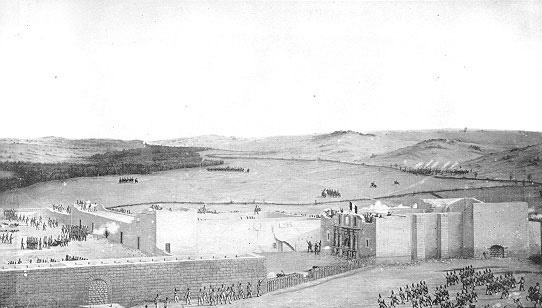
Background: In 1835, American settlers in Mexican Texas revolted against the central government of President Antonio López de Santa Anna, who had abolished the federal constitution and imposed authoritarian rule. The Texans declared independence, and Santa Anna personally led an army of 6,000 soldiers to crush the rebellion.
What Happened: From February 23 to March 6, 1836, approximately 187 Texan volunteers held the Alamo Mission in San Antonio against Santa Anna's army of over 3,000. The defenders included legendary frontiersman Davy Crockett, knife-fighter Jim Bowie, and the 26-year-old commander William B. Travis, who famously drew a line in the sand and asked who would stay to fight. At dawn on March 6, Mexican forces launched their final assault. The battle lasted roughly 90 minutes. Every defender was killed.
Significance: "Remember the Alamo!" became the rallying cry of the Texas Revolution. Six weeks later, General Sam Houston routed Santa Anna's forces at the Battle of San Jacinto, capturing the dictator himself and securing Texan independence. The Alamo remains one of America's most potent symbols of courage and sacrifice — a shrine visited by 2.5 million people each year.
3. 1857 — The Dred Scott Decision: The Supreme Court Denies Black Citizenship
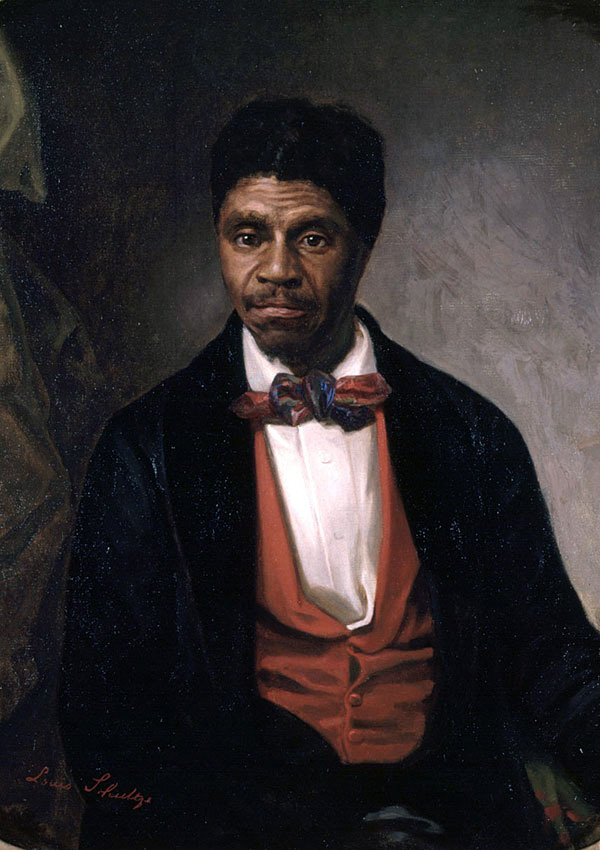
Background: By the mid-19th century, the United States was tearing itself apart over slavery. Dred Scott, an enslaved man from Missouri, had lived with his owner in Illinois (a free state) and the Wisconsin Territory (where slavery was banned by the Missouri Compromise of 1820). Scott argued that his residence in free territory had made him a free man and sued for his liberty.
What Happened: On March 6, 1857, the Supreme Court ruled 7–2 against Scott in Dred Scott v. Sandford. Chief Justice Roger B. Taney delivered a devastating opinion: Black people "had no rights which the white man was bound to respect" and could never be U.S. citizens. The Court went further, declaring that Congress had no power to ban slavery in the territories — effectively striking down the Missouri Compromise as unconstitutional.
Significance: The Dred Scott decision is widely regarded as the worst ruling in Supreme Court history. Far from settling the slavery debate, it inflamed tensions to the breaking point. Within four years, the nation plunged into the Civil War (1861–1865). The ruling was effectively overturned by the 13th Amendment (abolishing slavery, 1865) and the 14th Amendment (guaranteeing citizenship and equal protection, 1868). Scott himself was freed by his new owner just months after the decision but died of tuberculosis in 1858.
4. 1953 — After Stalin's Death, Malenkov Seizes Power in the Soviet Union
Background: On March 5, 1953, Joseph Stalin — the man who had ruled the Soviet Union with an iron fist for nearly three decades — died of a cerebral hemorrhage at age 74. His death created an enormous power vacuum. The question of succession had never been formally addressed; Stalin had systematically eliminated potential rivals through purges that claimed millions of lives.
What Happened: On March 6, 1953, just one day after Stalin's death, Georgy Malenkov was named Chairman of the Council of Ministers (Premier) and First Secretary of the Communist Party, effectively making him the most powerful man in the Soviet Union. Malenkov, who had been Stalin's closest protégé, moved swiftly to consolidate power. But his grip was tenuous. Within two weeks, he was forced to relinquish the party leadership to Nikita Khrushchev, and a bitter three-way struggle between Malenkov, Khrushchev, and secret police chief Lavrentiy Beria began in earnest.
Significance: Stalin's death and the chaotic succession that followed marked the beginning of the end of totalitarian one-man rule in the Soviet Union. Malenkov's brief tenure signaled a shift toward collective leadership. Khrushchev eventually prevailed, launching his famous "de-Stalinization" campaign in 1956 and ushering in the "Thaw" — a period of relative openness that reshaped Soviet society and Cold War dynamics.
5. 1957 — Ghana Becomes the First Sub-Saharan African Nation to Gain Independence

Background: After World War II, the winds of decolonization swept across Asia and Africa. In the British colony of the Gold Coast, a charismatic leader named Kwame Nkrumah spearheaded the independence movement. Imprisoned multiple times for his anti-colonial activism, Nkrumah won a landslide victory in the 1951 self-government elections and became Prime Minister — while still technically a colonial subject.
What Happened: At midnight on March 6, 1957, the Gold Coast became the independent nation of Ghana — the first country in Sub-Saharan Africa to break free from colonial rule. In a jubilant ceremony in Accra attended by dignitaries from around the world, including U.S. Vice President Richard Nixon and Martin Luther King Jr., Nkrumah declared: "Our independence is meaningless unless it is linked up with the total liberation of the African continent." The new nation took its name from the medieval Ghana Empire, a symbol of African greatness predating European colonialism.
Significance: Ghana's independence sent shockwaves across the continent. Within the next decade, more than 30 African nations followed suit, making the late 1950s and 1960s the "African Independence Era." Nkrumah became the leading voice for Pan-Africanism and helped establish the Organization of African Unity (now the African Union) in 1963. Ghana's March 6 is a date that changed not just one nation, but the trajectory of an entire continent.
📌 History is a mirror reflecting today. Learning from past mistakes and drawing inspiration from great achievements — that's why we study history. What historical events await you tomorrow?
Comments
Post a Comment